
CARTAGE · FLEET ENABLE
A Missed Window Costs More Than The Move Is Worth
Cartage runs on terminal hours, waybill accuracy, and turns per driver. Fleet Enable reads the waybill on arrival, plans the recovery against the terminal’s clock, and bills the waiting time and accessorials the move actually earned.
What Cartage Carriers Need
Waybill intake, terminal-aware dispatch, and billing that captures every accessorial on the move.
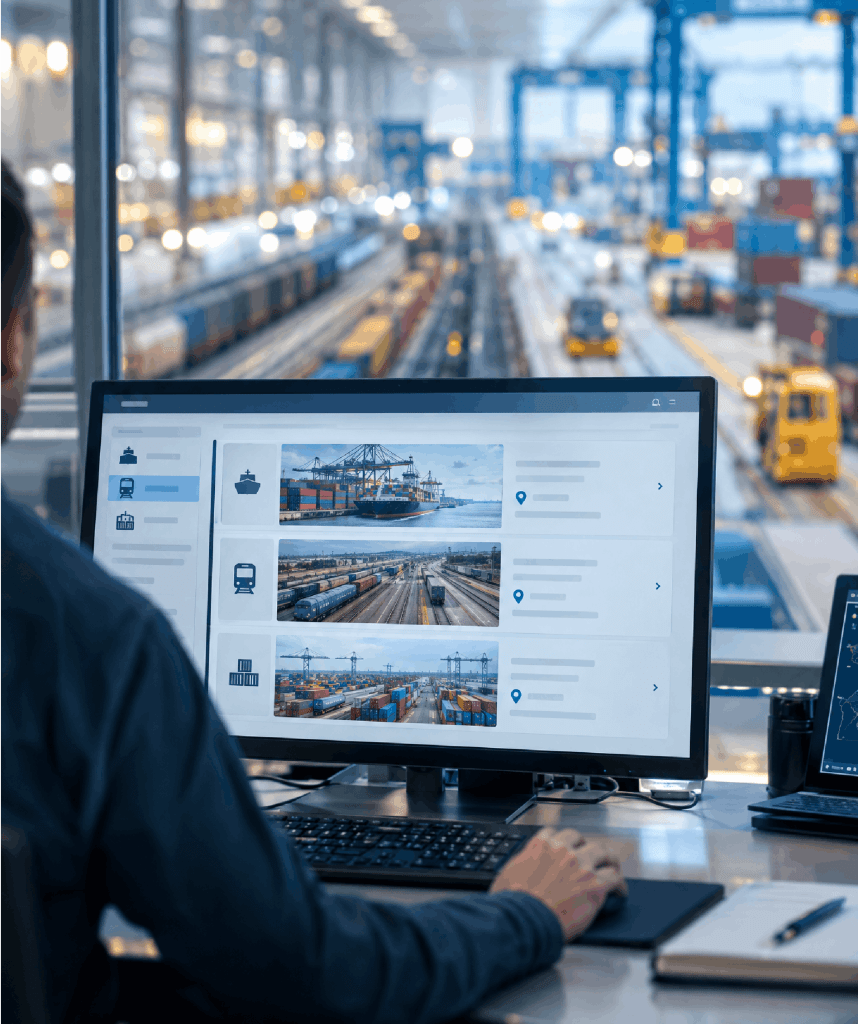
Terminal and Airport Bank
Airline cargo terminals, ports, and rail yards already in the system, so dispatch pulls from a ready library instead of typing the address again.

Recoveries and Deconsolidation
Inbound freight visible before it clears the terminal, with the next move, delivery, hold, or deconsolidation decided on one board.
Waybill Intake and Search
House and master air waybills read on arrival and filed against the order, findable later by order number, HAWB, or MAWB.

Pickup and Delivery Proof
Photos, signatures, and piece counts captured at both ends of the move, attached to the order the moment the driver closes it.


Window-Aware Dispatch
Routes built around terminal hours, cutoffs, and appointment times, so the recovery lands inside the window rather than against it.

Accessorial-Complete Billing
Waiting time, after-hours pickups, inside delivery, and second attempts priced to the account and captured on the invoice from the move itself.
Where Cartage Margins Disappear

The Window That Will Not Wait
A terminal closes on its own schedule. Freight that misses the cutoff becomes tomorrow’s problem, a second trip, and a driver who spent the afternoon getting nothing done.
Dispatch built around terminal hours and appointment times keeps the recovery inside the window it was planned for.

The Morning Spent On Waybills
Forwarder paperwork arrives in every format there is, and each shipment has to be in the system before a driver can be sent to collect it.
Waybills are read on arrival, checked, and filed against the order, so the board is ready before the first truck rolls.

Waiting Time That Never Reaches the Invoice
Dock waits, after-hours collections, and extra handling are earned in the field and easy to lose before billing.
Charges captured from the move itself mean the invoice reflects the work that was actually done.
Cartage Questions, Answered
What is cartage software?
Cartage software manages short-haul moves between terminals, airports, ports, and local doors. It handles waybill intake, dispatch against terminal windows, proof at pickup and delivery, and the accessorials specific to local freight work.
How does Fleet Enable handle house and master air waybills?
Waybills are read on arrival and filed against the order, searchable by order number, HAWB, or MAWB, so the reference a forwarder quotes on the phone finds the shipment.
Are airport and port terminals already in the system?
Yes. Airline cargo terminals, ports, and rail yards are pre-loaded with their own access details, so dispatch selects a location rather than retyping one.
Can we bill waiting time and after-hours work automatically?
Yes. Accessorials are recorded at the stop, priced against that account’s terms, and carried onto the invoice with the rest of the move.
Does the platform handle cartage alongside final mile?
Yes. Cartage, final mile, linehaul, and warehouse work run in the same platform, so a shipment moves from terminal recovery to the door without changing systems.